Problem

Sunscald on Trees: Cherry, Maple & Fruit Tree Bark

title: "Sunscald on Trees: Bark Cracking on Cherry, Maple, and Fruit Trees"

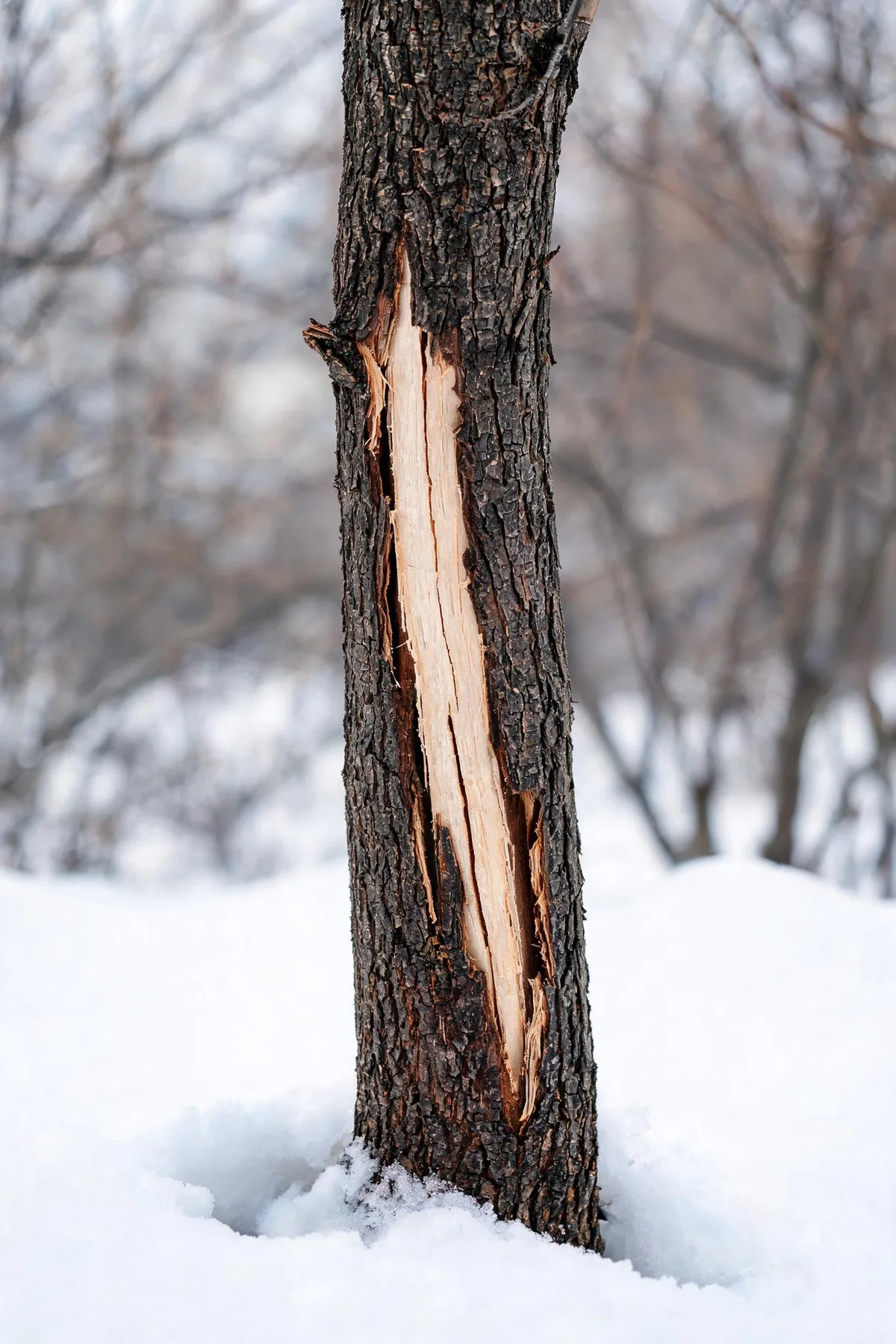
tree bark and trunk in outdoor garden
Photo: Unsplash on Unsplash

—- title: "Sunscald on Trees: Bark Cracking on Cherry, Maple, and Fruit Trees" slug: sunscald-trees hub: problems category: Problem description: "Sunscald causes cracked, discolored bark on cherry, maple, and fruit trees. Learn what causes it, which trees are most at risk, and how to prevent it with tree wraps." date: 2026-06-10 updated: 2026-06-10 author: "Thomas A." reading_time: 7 —-

A long vertical crack in the bark on the south or southwest side of a young cherry or maple tree is a distinctive sight in late winter on Long Island. The bark may be sunken, discolored, or peeling away from the wood. The tree looks like something severe happened to it. Something did — but not what most gardeners assume.

Sunscald is a specific winter injury to tree bark caused by rapid temperature fluctuations on sun-exposed surfaces. It is not a disease and cannot be treated with fungicide. The right response is to protect trees in advance and manage wounds correctly after damage occurs.

The mechanism: freeze-thaw injury to bark

Per Missouri Botanical Garden, sunscald occurs when "the cells in the bark and cambium on the south or southwest side of the trunk are warmed by direct winter sunlight, become active, and then are killed when temperatures drop rapidly after sunset." The activated cells lose their cold-hardening and are killed by refreezing.

The result is a dead patch of cambium — the thin layer between bark and wood that contains the tree's growth cells. When the cambium is killed, the overlying bark dies and eventually loosens or falls off. The exposed wood may darken and crack.

Per NC State Extension, sunscald is most common on fruit trees, thin-barked ornamentals, and trees recently moved from a shaded nursery environment to full sun exposure. First-year transplants are at highest risk. Established trees with thick, rough bark are largely immune.

A related injury, frost cracks, is also caused by temperature extremes. Per Missouri Botanical Garden, frost cracks are long vertical splits caused by the rapid contraction of wood during sudden temperature drops, not specifically sun exposure. They often follow the same radial cracks each year, opening in winter and partially closing in summer.

Susceptible tree species

Per Penn State Extension, the trees most commonly affected by sunscald in the Northeast:

TreeSusceptibilityNotes
Sweet cherry (Prunus avium)HighSmooth bark; highly susceptible first 3—5 years
Peach (Prunus persica)HighThin bark; standard in orchard guides to wrap first 2 winters
Apple and crabapple (Malus spp.)Moderate-highYoung trees; rough bark reduces risk as trees age
Plum (Prunus spp.)Moderate-highSimilar to cherry
Japanese maple (Acer palmatum)HighThin bark, frequently damaged in zone 7a
Silver maple (Acer saccharinum)ModerateFrost cracks more common than sunscald
Linden (Tilia spp.)ModerateYoung trees on exposed sites
Serviceberry (Amelanchier spp.)ModerateThin-barked; watch first three years

Per NC State Extension, in commercial orchards, sunscald and southwest disease (the term sometimes used for sunscald in fruit trees) can cause significant crop losses through repeated cambium damage that allows entry of wood-rotting pathogens.

Symptoms and identification

Per Missouri Botanical Garden:

The location is the best diagnostic clue: sunscald damage is almost always on the south, southwest, or west side of the trunk. Damage that wraps uniformly around the trunk or occurs on the north side suggests other causes (mechanical damage, chemical injury, disease).

Managing damaged trees

Per Penn State Extension, after sunscald occurs:

Remove loose, dead bark cleanly. Trim away dead bark back to healthy bark using a sharp knife or grafting tool. Per Missouri Botanical Garden, the wound should be cleaned up but not treated with wound paint. University research including from Cornell and Missouri Botanical Garden shows that wound sealants and tree wound paint do not speed healing and may slow it by trapping moisture.

Allow the wound to callus naturally. The cambium at the wound edges will produce callus tissue that gradually grows over the wound. This takes years on large wounds.

Protect in subsequent winters. A tree that has had sunscald is more susceptible to repeat injury in the same location. Wrap the injured area in subsequent winters until the tree develops thicker, rougher bark.

Monitor for canker development. Per NC State Extension, sunscald wounds on fruit trees are entry points for canker-causing fungi. Watch for spreading dead wood, sunken cankers, and gumming (amber-colored resin exuding from the wound) and treat promptly if cankers develop.

Prevention

Tree wrap. Per Missouri Botanical Garden, wrap the trunk in light-colored tree wrap or spiral plastic guards to reflect solar radiation. Apply in late fall (Thanksgiving is a common timing on Long Island), starting from the base and wrapping upward in overlapping spirals to where the first major branches begin. Remove the wrap in spring — leaving it on year-round creates habitat for insects and disease.

Per Penn State Extension, white-painted or light-colored wraps are more effective than dark-colored ones because they reflect radiation rather than absorbing it. Some commercial orchardists paint trunks with white latex paint diluted 50% with water for the same effect.

Protect for 3—5 years. Per NC State Extension, trees develop rough, thick bark over time and become much less susceptible. The high-risk window for fruit trees is approximately the first three to five years after planting. For thin-barked ornamentals like Japanese maple, protection may be warranted longer on exposed sites.

Proper planting depth. Planting trees too deep stresses them and weakens the bark response. Keep the root flare at or slightly above grade.

Avoid late-season fertilization. Nitrogen applications in late summer push soft growth that hardens off poorly and is more susceptible to winter injury of all kinds, including sunscald.

Common problems table

SymptomCauseFix
Long crack on south side of young cherry trunkSunscald/southwest diseaseClean up dead bark; wrap next fall; do not use wound paint
Bark peeling off southwest side of apple treeSunscaldSame as above; check for canker development
Vertical crack on maple, opens each winter, closes in summerFrost crackFrost cracks are mostly cosmetic; protect the wound in winter
Dark, sunken patches on peach trunk with gum exudingSunscald plus canker fungus entryPrune affected wood; copper fungicide; consult orchardist guides
Damage on all sides of trunkNot sunscald — different causeInvestigate mechanical damage, flooding, chemical exposure, voles

Frequently asked

Should I use wound paint on sunscald damage?

No. Per Missouri Botanical Garden, research has shown that wound sealants do not speed wound closure and can trap moisture and pathogens. The current recommendation from extension researchers is to clean the wound edges and allow natural callusing. The old practice of painting wounds with pruning tar or asphalt-based sealants has been discredited.

Will my tree die from sunscald?

Established trees rarely die from a single sunscald event unless the damage girdles the entire trunk. Per Penn State Extension, when damage covers more than 50% of the trunk circumference, the tree's vascular system is significantly compromised. Trees with girdling damage, or those that develop severe cankers at the wound site, may die over several years. Young trees with partial sunscald typically recover if managed correctly and protected in subsequent winters.

When should I apply tree wrap?

Per Missouri Botanical Garden, wrap trees in late fall before the first hard freeze — in the Long Island zone 7a area, typically late November. Remove the wrap in spring when nighttime temperatures are consistently above 25°F, typically late March or April. Do not leave wrap on year-round.

Which fruit trees are most at risk on Long Island?

Per NC State Extension, cherry and peach are the highest-risk species in northeastern orchards. Apple and plum are moderately susceptible. Standard practice in commercial Long Island orchards is to wrap or paint the trunks of newly planted cherry and peach trees the first three winters.

Recommended gear: Best [Japanese maple cultivars by size, color, and leaf shape](https://outdoorplantcare.com/plants/best-japanese-maple-cultivars/) — our buyer's guide covering picks for every budget, ranked by Extension publication consensus and personal use.

Sources

  1. Missouri Botanical Garden &mdash; <a href="https://www.missouribotanicalgarden.org/gardens-gardening/your-garden/help-for-the-home-gardener/advice-tips-resources/pests-and-problems/environmental/sunscald-bark-splitting-and-frost-cracks">Sunscald, Bark Splitting and Frost Cracks</a>
  2. Penn State Extension &mdash; <a href="https://extension.psu.edu/sunscald">Sunscald</a>
  3. NC State Extension &mdash; <a href="https://content.ces.ncsu.edu/sunscald-of-fruit-trees">Sunscald of Fruit Trees</a>

Sources