Problem

Peach Leaf Curl: Dormant Copper Spray Timing Guide

title: "Peach Leaf Curl: Identification, Treatment, and Dormant Copper Spray Timing"

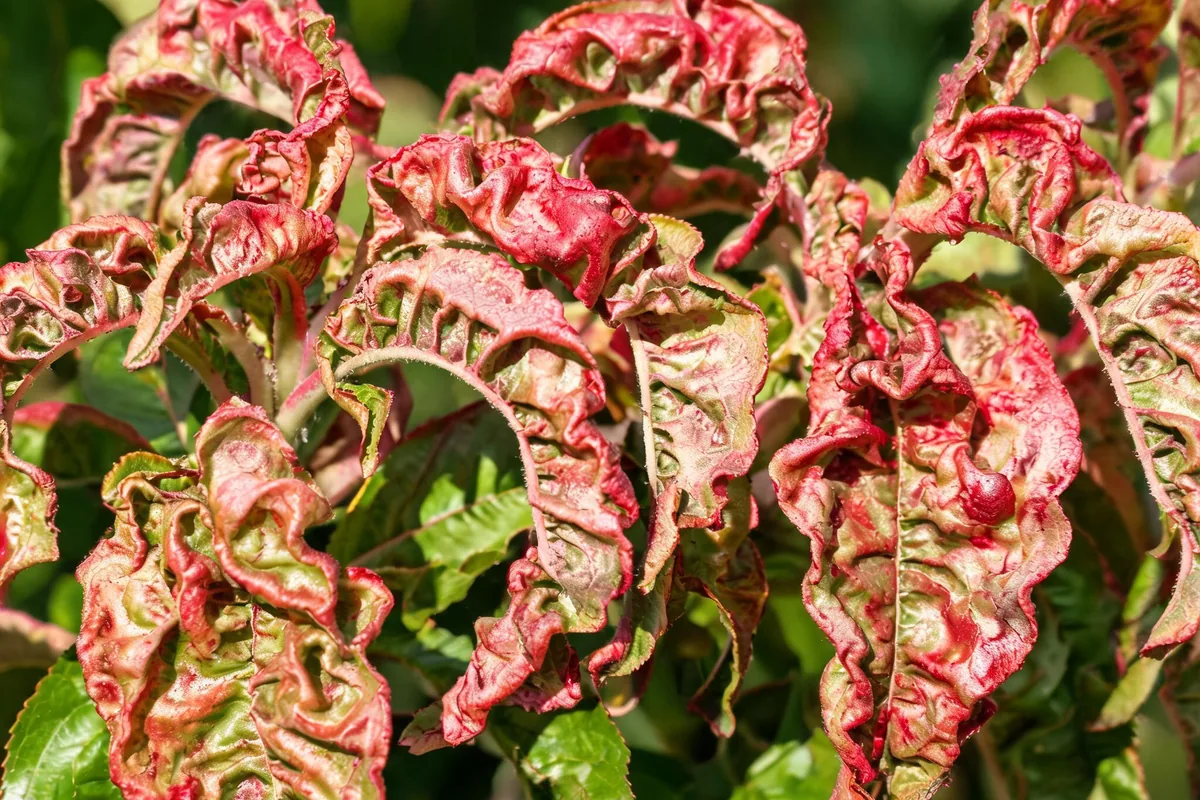
fruit tree branch with leaves affected by disease
Photo: Unsplash on Unsplash

—- title: "Peach Leaf Curl: Identification, Treatment, and Dormant Copper Spray Timing" slug: peach-leaf-curl hub: problems category: Problem description: "Peach leaf curl caused by Taphrina deformans: how to identify the reddish blistered leaves, why spring treatment doesn't work, and when to apply dormant copper spray." date: 2026-06-10 updated: 2026-06-10 author: "Thomas A." reading_time: 7 —-

Peach leaf curl is one of the most predictable and visually dramatic diseases in the home orchard. A peach tree that looked healthy going into winter emerges in spring with curled, puckered, reddish-pink leaves that look nothing like normal foliage. Gardeners who have never seen it before often assume they are looking at a serious systemic problem or misidentify it as an insect infestation.

It is neither. Peach leaf curl is caused by a single fungal pathogen, is diagnosed easily, and — crucially — is almost completely preventable with a single well-timed spray in late winter. The irony is that treatment cannot happen once symptoms appear, making the timing of dormant spray the entire game.

The pathogen and its lifecycle

Taphrina deformans is an ascomycete fungus that infects the developing leaves of peach, nectarine, and to a lesser extent apricot and almond. Per UC IPM, the fungus overwinters as yeast-like cells (ascospores and conidia) on the bark surface of infected trees and on adjacent plant surfaces. When conditions are cool and wet in late winter and early spring, these cells germinate and infect the just-expanding bud scales and young leaf tissue.

Per Cornell Cooperative Extension, infection occurs during the brief window of bud swell — when buds begin to push but leaves have not yet emerged. Once leaves are fully out, the window for new infection is essentially closed for that season. Symptoms then develop as the infected leaves expand.

The fungus is not active on fully developed leaves. It infects only during bud swell and early emergence in cool, wet spring weather. This biology is why dormant treatment is preventive, not curative.

Symptoms

Per UC IPM and Missouri Botanical Garden:

Early symptoms (emerging leaves):

Later symptoms:

Plant effects:

Per Cornell Cooperative Extension, in northeastern orchards, peach leaf curl can defoliate susceptible trees by June in years with wet, cool spring weather during bud swell. This timing corresponds to Long Island conditions in April when peach buds break — and when April rain and temperatures between 50°F and 60°F are common.

Hosts

Per UC IPM:

Per Cornell Cooperative Extension, ornamental flowering peach (Prunus persica var. ornamental) varieties are equally susceptible.

Treatment window: dormant spray

This is the crucial point about peach leaf curl: treatment must happen before bud break. Per UC IPM, the timing is:

The best single-application timing on Long Island is typically late February to early March, before any bud movement is visible. Per NC State Extension, "the most critical aspect of disease management is applying a dormant spray of an effective fungicide before bud swell."

Effective fungicides

Per UC IPM:

ProductNotes
Fixed copper fungicideMost widely available; effective; OMRI-listed organic option
Lime-sulfurHighly effective; strong odor; may stain surfaces
ChlorothalonilEffective; not OMRI-listed
Bordeaux mixture (copper + lime)Traditional orchard treatment; effective

For home orchards, fixed copper fungicide (copper hydroxide, copper sulfate) is the standard recommendation. Per Clemson HGIC, apply at a rate that achieves thorough coverage of all bark surfaces, buds, and bark crevices where overwintering fungal cells reside.

Per Penn State Extension, if the dormant spray window is missed and symptoms appear in spring, "no treatments are effective" for the current season. The tree will defoliate and push new leaves. Apply a dormant spray the following late winter to protect next year's crop.

What happens if you miss the spray

Per UC IPM, if peach leaf curl develops:

  1. The tree will likely push a second leaf flush after the infected leaves drop. The second flush is not infected (new infection cannot occur on expanded leaves), so it looks normal.
  2. Fertilize the tree in late spring to help it recover from the energy expenditure.
  3. Water adequately if the summer is dry.
  4. The tree typically survives one season of leaf curl without permanent damage, though yield is reduced.
  5. Plan a dormant spray for next winter.

Per Cornell Cooperative Extension, repeated severe defoliation over multiple consecutive years weakens trees and reduces their productive life. This is why consistent dormant spray every year is the practical standard for peach and nectarine in the Northeast.

Resistant varieties

Per UC IPM, some peach and nectarine varieties show moderate resistance to leaf curl:

These varieties still benefit from dormant spray in wet years, but may escape infection in drier springs without treatment. Per Penn State Extension, resistant varieties are more practical in regions with dry springs; in the wet Northeast, dormant spray remains the recommended practice even on tolerant varieties.

Common problems table

SymptomCauseFix
Reddish-pink, puckered leaves on peach in springPeach leaf curl (Taphrina deformans)No cure this season; apply dormant copper spray next late winter
White powder on curled peach leavesSpore production phase of Taphrina deformansSame — no in-season treatment; plan for next dormant season
Peach defoliates by June, pushes second growthSevere leaf curl with full defoliationWater and fertilize to support second flush; dormant spray next year
Applied copper spray in spring, no improvementApplied too late — after bud breakCopper protects; it doesn't cure. Apply before bud movement next year
Disease every year despite dormant spraySpray applied after bud swellMove timing earlier — before any bud movement is visible

Frequently asked

Can I treat peach leaf curl after symptoms appear?

No. Per UC IPM, once infection has occurred inside developing leaf tissue, fungicide has no effect. Infection happened before the symptoms became visible. The current year is lost; prevention for next year begins with dormant spray applied before buds swell.

Does my peach tree need copper spray every year?

Per UC IPM, in regions with cool, wet springs — which describes Long Island consistently — yes. Years with dry springs reduce infection pressure, but predicting a dry spring is unreliable. An annual dormant spray in February or early March is the standard practice for consistent leaf curl prevention.

Will leaf curl kill my peach tree?

One season of leaf curl is unlikely to kill an established tree. Per Cornell Cooperative Extension, repeated severe defoliation over multiple years weakens the tree and can shorten its productive life. Trees that are defoliated annually due to unmanaged leaf curl should be managed with dormant spray or replaced with more resistant varieties.

What's the exact timing for Long Island?

The safest window for a single application is late February to the first week of March, before any bud movement is visible. Check the tree frequently starting in late February. Once buds show any green tip, spray immediately if you haven't already — or wait until after leaf drop in fall. In many years on Long Island, the late February timing is practical before the next rainy period.

Sources

  1. UC IPM &mdash; <a href="https://ipm.ucanr.edu/PMG/PESTNOTES/pn7426.html">Peach Leaf Curl</a>
  2. Cornell Cooperative Extension &mdash; <a href="https://cals.cornell.edu/new-york-state-integrated-pest-management/outreach-education/whats-wrong-my-plant/trees-shrubs/peach-leaf-curl">Peach Leaf Curl</a>
  3. Penn State Extension &mdash; <a href="https://extension.psu.edu/peach-leaf-curl">Peach Leaf Curl</a>
  4. NC State Extension &mdash; <a href="https://content.ces.ncsu.edu/peach-leaf-curl">Peach Leaf Curl</a>
  5. Missouri Botanical Garden &mdash; <a href="https://www.missouribotanicalgarden.org/gardens-gardening/your-garden/help-for-the-home-gardener/advice-tips-resources/insects-pests-and-problems/problems/leaf-curl">Leaf Curl</a>
  6. Clemson HGIC &mdash; <a href="https://hgic.clemson.edu/factsheet/peach-diseases/">Peach Diseases</a>

Sources