Home / Problems / Why Isn't My Hydrangea Blooming? Six Real Causes
Problem
Why Isn't My Hydrangea Blooming? Six Real Causes
title: "Why Isn't My Hydrangea Blooming? Six Real Causes"
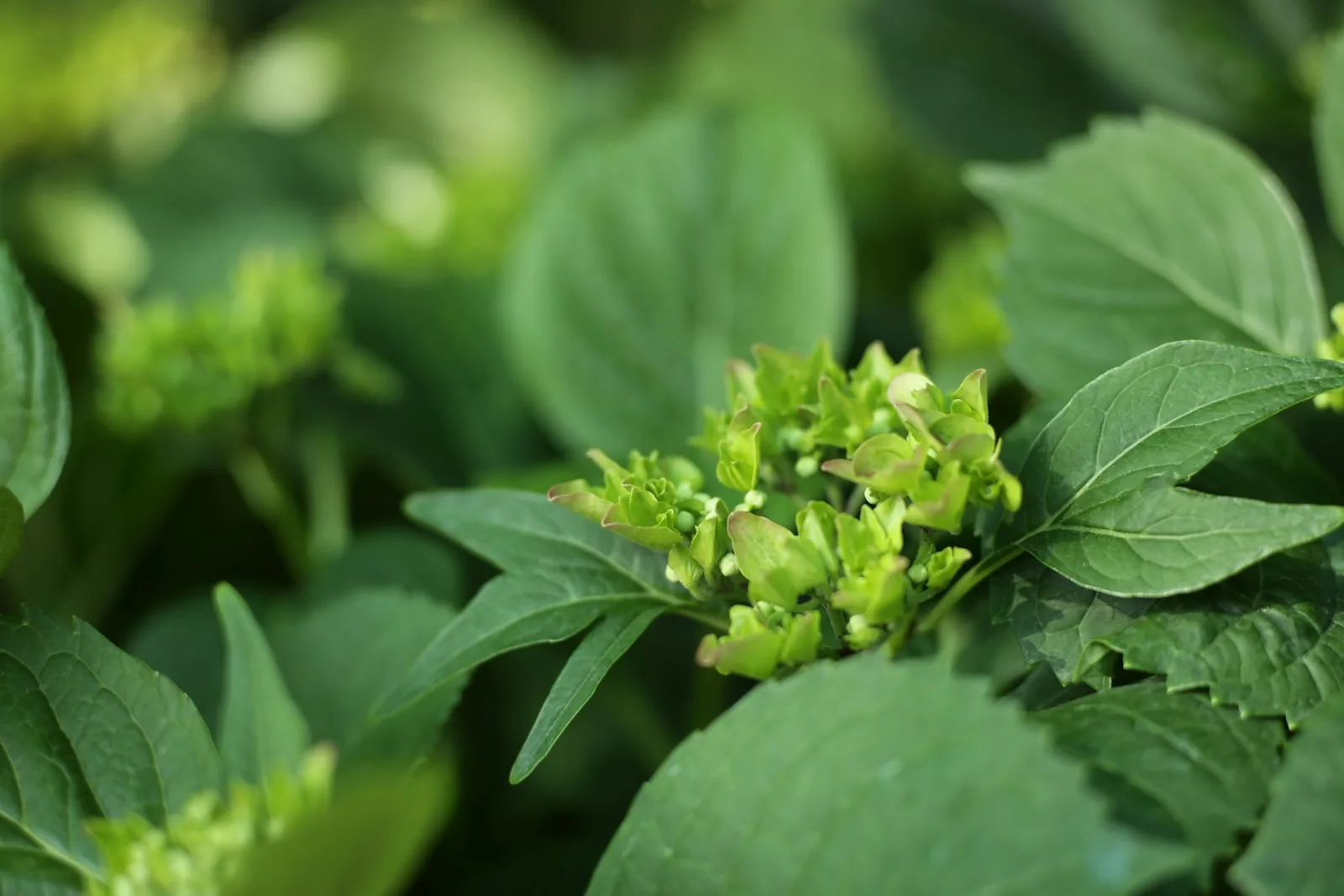
Photo: Unsplash on Unsplash A hydrangea that refuses to bloom is one of the most common garden complaints, and the fix depends entirely on which species you have. Hydrangea macrophylla (bigleaf, mophead, lacecap) fails to bloom for completely different reasons than H. paniculata (panicle, PeeGee, Limelight) or H. arborescens (smooth, Annabelle). Applying the wrong solution — say, pruning advice for one species to a plant that blooms differently — will not help and may make the problem worse.
I grow both H. paniculata and H. macrophylla in my Melville yard (zone 7a). The mophead on the east side of the house refused to bloom for two summers after I moved it — that was transplant shock. The paniculata I've never had a problem with, because it blooms on new wood and there's very little you can do wrong with it from a bloom standpoint.
The honest summary: For H. macrophylla in zones 5—7, the two most likely causes of bloom failure are (1) winter flower bud kill and (2) pruning at the wrong time. Both kill the same thing — the flower buds that form in August on last year's wood. If you have H. paniculata or H. arborescens and they aren't blooming, the cause is almost certainly too much shade or a very young plant. Identify your species first; everything else follows from that.This article contains affiliate links. As an Amazon Associate, we earn from qualifying purchases - at no extra cost to you. We only recommend products we have personally tested or that are the universal first recommendation from university Extension publications. See our full disclosure .
Table of Contents
Identify Your Species First The Six Causes of Bloom Failure Species-Specific Diagnosis Common Situations Table Frequently Asked
Reader questions
Questions from other readers about this guide. Ask your own — if it's a good question, the answer goes here for the next reader.
Should I cut back my mophead hydrangea if it didn't bloom?
No. Per University of Minnesota Extension, cutting back a *H. macrophylla* in fall or winter removes the flower buds for next season. The only appropriate time to prune a mophead is immediately after it finishes blooming, before August. If the plant has not bloomed at all, do not prune it -- remove only dead wood (stems that snap rather than bend) in early spring.
Does Epsom salt help hydrangeas bloom?
Per Penn State Extension, there is no reliable evidence that Epsom salt (magnesium sulfate) promotes hydrangea blooming. Magnesium deficiency can cause leaf yellowing, and Epsom salt may address that specific symptom, but if the plant is not blooming because of bud kill, pruning timing, or shade, Epsom salt will not help. The common advice to apply Epsom salts for bloom promotion is not supported by extension research.
My hydrangea bloomed for years and then stopped. What changed?
The most common causes of a sudden change in bloom performance after years of success: (1) an unusually cold winter killed the flower buds; (2) a pruning was done at the wrong time -- perhaps by someone unfamiliar with hydrangea pruning timing; (3) a tree or shrub nearby grew large enough to increase shade significantly; (4) deer pressure increased. Per Penn State Extension, each of these is documented as a cause of bloom failure in established plants.
Are 'Endless Summer' hydrangeas really reliable bloomers?
More reliable than standard *H. macrophylla*, but not unconditionally so. Per University of Minnesota Extension, 'Endless Summer' and similar reblooming varieties produce flower buds on both old and new wood, meaning that even if winter kills the old-wood buds, new buds will form on the current season's growth. However, the flowers produced on new wood are often smaller and fewer than those produced on old wood. In extreme winters (zone 5 or north), even reblooming varieties may show poor bloom. They are a meaningful improvement over standard varieties in cold climates, but are not a guarantee. --- > Recommended gear: The 10 best hydrangea cultivars by type (mophead, paniculata, oakleaf) — our buyer's guide covering picks for every budget, ranked by Extension publication consensus and personal use.
One honest gardening email a day for 30 days
Real techniques from a Long Island zone 7a garden, each tied to a primary Extension source. No listicles. No filler. Unsubscribe any time.
Send me the emails