Yew Care: Evergreen Hedges and Foundation Plants
Yew (Taxus spp.) is the most shade-tolerant evergreen hedge in zones 4–7 and responds well to shearing — but the entire plant except the red arils is toxic, it is frequently overwatered and killed, and deer eat it severely in high-pressure areas.
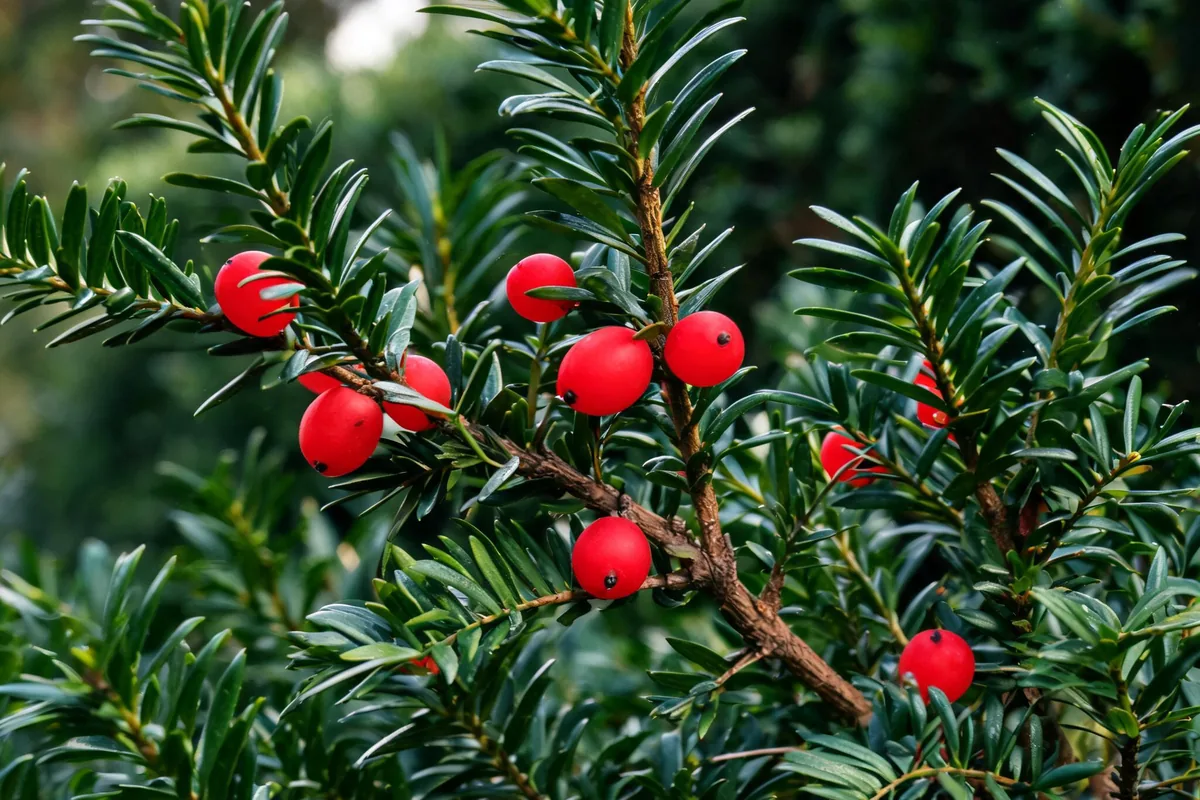
Yew species and cultivars
Two species and one widely used hybrid cover most landscape yew use in North America.
English yew (Taxus baccata)
The ancient European yew. Slow-growing, very long-lived (centuries in the right conditions), the source of most formal topiary and hedge yew in European gardens. Per Missouri Botanical Garden, English yew is hardy in zones 5–7 and "is the standard hedge yew of English formal gardens but can be less reliably cold-hardy than Japanese or Anglojap yew in North American zone 5 winters." Grows to 20–60 feet in natural form.
Japanese yew (Taxus cuspidata)
Hardier than English yew — zones 4–7. Per Penn State Extension, Japanese yew "is more reliably cold-hardy for zone 4–5 gardens in the upper Midwest and Northeast." Its spreading, less formally dense habit makes it more commonly used as a foundation shrub or groundcover than a clipped hedge.
Anglojap yew (Taxus × media)
The hybrid between English and Japanese yew. The most widely planted landscape yew in North America. Per University of Minnesota Extension, "Anglojap yew combines the density and fine texture of English yew with the cold hardiness of Japanese yew" and "is available in a wide range of cultivars covering everything from low groundcovers to tall shrubs and small trees." Key cultivars:
- 'Densiformis': Dense, mounding form, 3–4 feet tall and wide. The most commonly planted foundation yew.
- 'Hicksii' (Hicks yew): Narrow, upright column, 12–20 feet. The standard for narrow upright hedges and privacy screens.
- 'Browni': Dense rounded form, 4–6 feet. Widely used as a foundation plant and clipped ball specimen.
- 'Tauntonii': Low spreading, 3–4 feet, notably cold-hardy to zone 4. Better than other selections for exposed, cold sites.