Species guide

Sunflower Care: Single-Stem and Branching Types

Growing Helianthus annuus from seed to harvest — single-stem cut-flower varieties vs. branching landscape types, support, and the bird-vs-harvest tradeoff for seed heads.
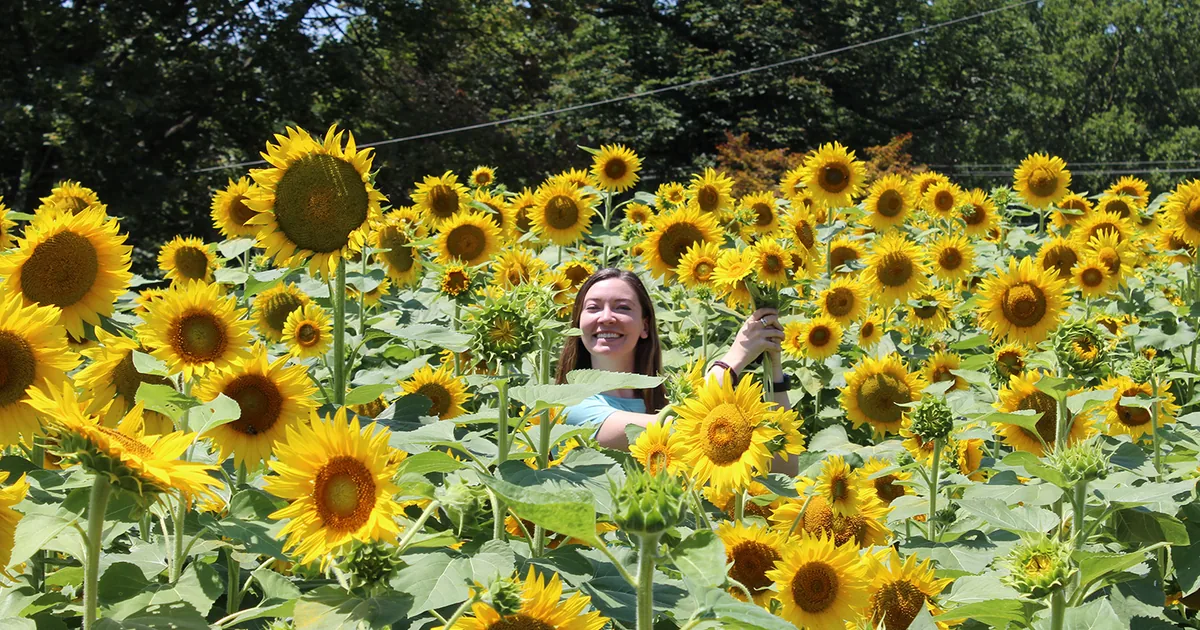
Tall yellow sunflowers with dark centers growing in a sunny summer garden border
Photo: Unsplash

Single-stem vs. branching sunflowers

The most important variety decision determines the growth habit and how the plant is used.

Single-stem varieties

One large flower per stalk, then the plant is done. Varieties like 'Mammoth Russian', 'Giant Grey Stripe', and the 'ProCut' series are single-stem types. Pollenless varieties ('ProCut Orange', 'ProCut Gold') are preferred for cut flowers because they don't drop yellow pollen on table surfaces and have longer vase life. Per University of Minnesota Extension, single-stem types "produce one flower per plant" and are "better for cut flowers when a large stem count is the goal." Succession sow every 2–3 weeks for a continuous harvest rather than a single flush.

Branching (multi-stem) varieties

A single plant produces multiple stems and flowers over a longer period. 'Autumn Beauty', 'Italian White', 'Lemon Queen', and 'Teddy Bear' are branching types. Per University of Minnesota Extension, branching types are better "for garden display and continuous bloom" because a single planting produces flowers for weeks rather than a single simultaneous flush. They are also better pollinator plants, offering more flowers per plant over a longer period.

Dwarf varieties

'Sunspot', 'Big Smile', and 'Little Becka' top out at 18–24 inches. Good for containers and front-of-border use where a 6-foot plant would be excessive. Most are branching types.

USDA hardiness and where sunflowers grow

Sunflowers are warm-season annuals grown in zones 4–9 for most of the season and zones 3 and 10–11 with timing adjustments. Helianthus annuus is native to North America and is well-adapted to a wide range of conditions. The primary requirements are full sun and warmth — they are not successful in cool, cloudy climates or in partial shade. Per Penn State Extension, sunflowers grow "in nearly all areas of the country where there is sufficient heat and sunlight."

Light

Full sun, without compromise. Sunflowers need 6–8+ hours of direct sunlight daily. They will track the sun (heliotropism) during the growing phase, with young plants facing east in the morning and west in the afternoon; at maturity, most varieties fix facing east. Planting in full sun is not just a recommendation — a sunflower in part shade will grow tall and spindly, with a small flower on a weak stem that flops. The site selection requirement is non-negotiable.

Watering

Sunflowers are surprisingly drought-tolerant once established, but they need consistent moisture in the first several weeks after germination while roots develop. Per Penn State Extension, "watering at the base of the plant, about 1 inch per week, is sufficient." Established large-variety sunflowers have taproots that reach deep into the soil and can access moisture unavailable to shallower-rooted plants.

The critical watering period is during flowering and seed fill. Drought stress during this phase produces fewer seeds per head, smaller seeds, and can cause premature petal drop. For cut-flower production, more consistent irrigation produces more uniform stems. Avoid waterlogged soils — sunflowers are susceptible to stem and root rots in poorly drained sites.

Soil and pH

Sunflowers grow in a wide range of soils, but perform best in well-drained loam or sandy loam with a pH of 6.0–7.5. They tolerate poor, infertile soils better than most vegetable crops. Per Texas A&M AgriLife Extension, sunflowers "do well in poor to average soils" — overly fertile soil produces lush foliage and tall, weak stems prone to toppling.

Do not plant sunflowers in the same spot two years in a row. Sunflowers are allelopathic — they release compounds from their roots and decaying plant matter that inhibit germination of some other plants, and rotating helps prevent soilborne diseases from building up.

Planting

Direct sow after the last frost date when soil temperature is at least 50°F; germination is faster (7–10 days) at 70°F. Per University of Minnesota Extension, seeds sown in cold (below 50°F) soil "may rot before germinating." Sow 1 inch deep. Sunflowers dislike root disturbance — direct sowing is strongly preferred over transplanting.

Spacing is where most home gardeners go wrong — they plant too close. Standard varieties need 18–24 inches between plants. Giant varieties ('Mammoth Russian') need 24–36 inches. Dwarf varieties can go 12 inches apart. Crowded sunflowers produce thin stems, smaller flowers, and have poor air circulation that promotes fungal diseases. Per Penn State Extension, correct spacing is "critical for strong stem development."

Succession sow every 2–3 weeks from last frost through late June for continuous cut-flower production. In zones 6–8, a final sowing in early July works for fall cut flowers.

Fertilizing

Sunflowers are light feeders compared to most vegetable crops. In average to moderately fertile soil, no supplemental fertilizer may be needed. Per Texas A&M AgriLife Extension, "excess nitrogen produces lush growth but can prevent or delay flowering" — the plant focuses on vegetative growth when nitrogen is abundant. In very poor or sandy soils, a single application of balanced fertilizer (10-10-10) at planting time is sufficient.

For cut-flower production where maximum stem count is the goal, a modest sidedress of balanced fertilizer at the 4-leaf stage can improve stem production from branching varieties without pushing excessive foliage.

Staking and support

Standard varieties (4–6 feet) grown in sheltered locations often need no staking. Giant varieties (8–12 feet) and all sunflowers in exposed, windy sites need support. Install a stake as tall as the anticipated plant height at planting time — trying to stake a full-grown sunflower risks root damage. Tie stems loosely with soft garden twine every 18 inches as the plant grows. Per Penn State Extension, "staking prevents the top-heavy plants from toppling" in wind and during heavy-headed seed fill.

Harvesting cut flowers

For vase life, cut single-stem sunflowers when the outermost petals are beginning to open but the center disk is still tight and not fully showing pollen. Cutting too early (bud stage) produces flowers that never open fully; cutting too late (fully open with pollen visible) reduces vase life. Cut early morning when stems are most hydrated, place immediately in water, and strip all foliage below the waterline. Vase life is 7–12 days when cut at the right stage.

Seed harvest

To harvest seeds for eating or replanting, allow the head to mature fully on the plant. The back of the head will turn from green to yellow-brown, and the seeds will become firm and fully colored. Cut heads when ripe and hang in a dry, ventilated location for 1–4 weeks to cure. Rub seeds from the head when fully dry. Per University of Minnesota Extension, covering ripening heads loosely with mesh or paper bags deters birds while allowing air circulation for continued drying.

Common problems

Sclerotinia stem rot (white mold)

Caused by Sclerotinia sclerotiorum; appears as white cottony growth and dark brown stem lesions that girdle the plant. Per University of Minnesota Extension, infected plants wilt and die rapidly. There is no cure. Remove infected plants, improve air circulation through proper spacing, and avoid overhead watering. Crop rotation of at least 3 years before returning sunflowers to the same site reduces soilborne inoculum.

Downy mildew

Pale yellow angular patches on upper leaf surfaces, gray-purple fuzzy growth on undersides in humid conditions. Per University of Minnesota Extension, downy mildew is a serious issue in commercial sunflower production but less common in garden settings with good air circulation. Remove infected leaves; improve plant spacing.

Deer and squirrels

Both are highly attracted to sunflower seed heads during ripening. In high-deer-pressure areas like suburban Long Island, sunflowers in open beds without fencing are frequently heavily browsed. Lightweight bird netting or individual paper bags over ripening seed heads are practical deterrents for home-garden scale.

Aphids

Most common on young plants; heavy infestations stunt growth and distort leaves. Per UC IPM, natural predators (lady beetles, parasitic wasps) control most garden aphid populations without intervention. If pressure is heavy, insecticidal soap is effective.

Frequently asked

How tall do sunflowers grow?

Standard garden varieties reach 4–6 feet. Tall landscape types like 'Autumn Beauty' grow 5–7 feet. Giant exhibition types ('Mammoth Russian', 'Russian Mammoth') regularly reach 10–12 feet and occasionally taller. Dwarf varieties top out at 18–24 inches. Days to flower (60–80 for standard types, 75–90 for giants) and ultimate height are both listed on seed packets.

Do sunflowers come back every year?

Helianthus annuus is a true annual and does not return from the same plant. However, if seed heads are left on the plant and not harvested, they often self-sow — you may find sunflowers "volunteering" in the same area the following year. These volunteers will be variable in their characteristics if the parent was a hybrid. Perennial sunflowers (Helianthus spp.) are a different group of plants.

Why is my sunflower growing tall but not flowering?

The most common reasons: too much shade (sunflowers need full sun for flower initiation), excess nitrogen in the soil from nearby lawn fertilizer or over-application at planting, or the variety has a long days-to-flower (giant types need 75–90+ days). Check the days-to-flower estimate for your specific variety and count from sowing date.

Can sunflowers grow in pots?

Dwarf varieties (under 24 inches) grow well in 12–15 gallon containers. Standard and giant varieties need containers that most gardeners don't have space for — a 5-gallon pot produces a stunted plant. For container growing, 'Little Becka', 'Sunspot', or 'Music Box' are appropriate variety choices.

Sources