Poppy Care: Annual and Perennial Papaver Species
Annual and perennial Papaver species need different soil prep and deadheading strategies — this guide covers both, plus rust, overwatering, and the exact sowing window that makes or breaks a poppy patch.
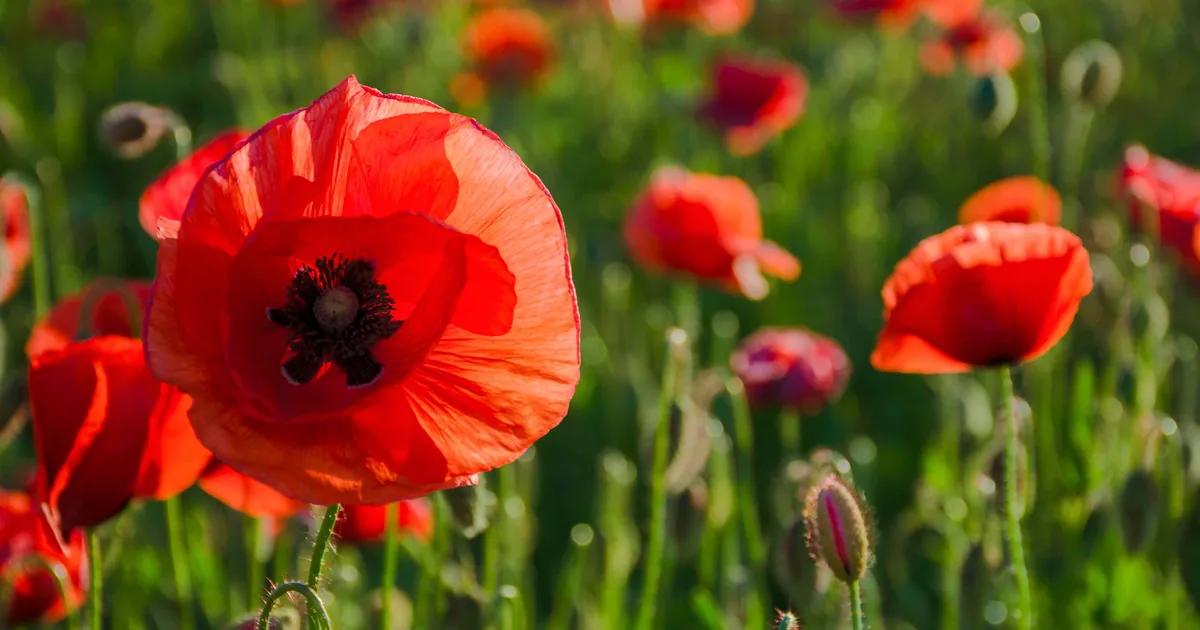
Which poppy do you have?
The word "poppy" covers plants in several genera, but most garden poppies belong to Papaver. The three types most home gardeners encounter are very different in lifecycle and care requirements.
Corn poppy / Flanders poppy (Papaver rhoeas)
The red-petaled poppy of Remembrance Day. A true annual — it germinates, blooms, sets seed, and dies in a single season. Blooms best in cool weather; plants collapse when summer heat arrives. Per Oregon State Extension, corn poppies "prefer cool temperatures and will stop blooming when heat arrives." Self-sows prolifically if seedheads are left to mature.
Breadseed / Opium poppy (Papaver somniferum)
Larger plant, blue-green foliage, flowers in white, pink, red, or purple with fringed petals. Also a cool-season annual. The ornamental double forms — 'Danish Flag,' 'Lauren's Grape,' 'Black Peony' — are grown entirely for flowers; the seedpods dry beautifully for arrangements. Per University of Minnesota Extension, all breadseed poppies are self-sowing annuals that naturalize easily in disturbed soil.
Oriental poppy (Papaver orientale)
The show-stopper perennial. Dinner-plate flowers in orange, red, coral, salmon, or white with black basal blotches. According to Penn State Extension, oriental poppies are "among the most spectacular of all hardy perennials" and are reliably perennial in USDA zones 3–7. The plant goes dormant in summer — the foliage yellows and disappears entirely — then re-emerges in fall as a rosette that overwinters and blooms again the following spring. This confuses new gardeners who think the plant died.