Regional guide

Native Plants for the Northeast: Zones 5-7 Pollinator Picks

Native plants for zones 5–7 in the Northeast — keystone species, pollinator value, where to source true natives, and why the cultivar vs. straight-species debate matters for your garden.
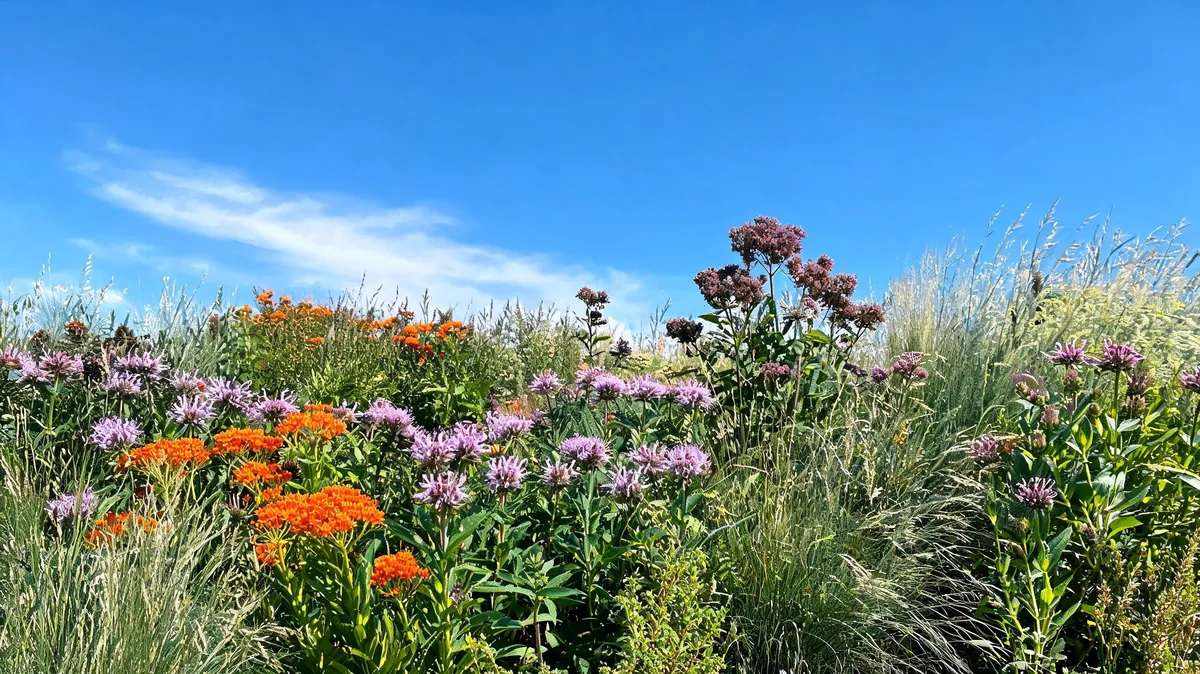
Native New England aster and goldenrod blooming in a late-season pollinator meadow garden
Original brand image — Outdoor Plant Care

What "native" actually means — and why the definition matters

A native plant, in the ecological sense, is a species that evolved in a particular region before European settlement and has developed co-evolutionary relationships with local insects, birds, and soil organisms. Per Penn State Extension, native plants "provide food, shelter, and other resources for wildlife that evolved alongside them" — relationships that exotic ornamentals, however beautiful, cannot replicate.

The controversy arises with cultivars and nativars — cultivated varieties selected from native species for traits like compact size, unusual foliage color, or double flowers. A straight-species black-eyed Susan (Rudbeckia hirta) and a cultivar called 'Cherry Brandy' with dark foliage and reddish flowers are both sold as "native plants." They are not ecologically equivalent. Per Xerces Society, research on nativars shows that "double-flowered cultivars provide little to no pollen or nectar for bees" and that "plants with purple or bronze foliage may be less attractive to caterpillars" that evolved to find green foliage. The data is not uniformly damning — some nativars perform similarly to straight species — but the principle is clear: when in doubt, plant the straight species.

What NOT to call native: Asclepias curassavica (tropical milkweed, native to South America), Buddleja davidii (butterfly bush, native to China), and garden-center "wildflower mixes" that typically contain European species like cornflower (Centaurea cyanus) and corn poppy (Papaver rhoeas). These are not native to the Northeast regardless of what the packaging implies.

Keystone species: why they matter more than aesthetics

Entomologist Doug Tallamy's research, widely cited by Xerces Society and Cornell University, identified "keystone genera" — plant groups that support disproportionate numbers of caterpillar species. In the Northeast, the most ecologically important genera are:

Per Penn State Extension, even a single native oak in a suburban yard provides dramatically more wildlife value than an equivalent area planted with non-native ornamentals.

Top 14 native perennials and shrubs for Northeast gardens

1. New England aster (Symphyotrichum novae-angliae)

Zones 4–8. Lavender to purple daisy flowers, September–October. One of the most important late-season nectar sources in the Northeast — critical for migrating monarchs and late-emerging native bees. Grows 3–6 feet tall in full sun with average moisture. Pinch back by half in late June to control height and increase branching. Per Xerces Society, asters "are among the top 10 most valuable native plants for bees in the eastern U.S."

2. Goldenrod (Solidago rugosa, S. canadensis, S. odora)

Zones 3–8. Yellow flowers, August–October. Does not cause hay fever (that's ragweed, which blooms simultaneously but is wind-pollinated). Supports over 100 insect species. S. rugosa 'Fireworks' is a garden-worthy cultivar; straight-species S. canadensis spreads more aggressively but provides higher wildlife value. Per Rutgers Cooperative Extension, goldenrod is "the single most important native fall wildflower for pollinators in New Jersey."

3. Wild bergamot (Monarda fistulosa)

Zones 3–9. Lavender flowers, July–August. Highly attractive to native bumblebees, sweat bees, and hummingbirds. Drought-tolerant once established. More resistant to powdery mildew than the red-flowered bee balm (M. didyma) common in cultivation. Full sun, average to dry soil. Self-sows modestly.

4. Purple coneflower (Echinacea purpurea)

Zones 3–9. Pink-purple flowers, June–August, with seed heads persisting into winter and feeding goldfinches. Full sun to part shade. The straight species provides far more ecological value than the double-flowered cultivars that dominate garden center displays. Per Penn State Extension, "leaving seed heads through winter provides food for overwintering birds."

5. Black-eyed Susan (Rudbeckia hirta)

Zones 3–9. Yellow daisy flowers with dark centers, June–September. Short-lived perennial or biennial — self-sows readily to maintain populations. Full sun. One of the easiest natives to establish from seed.

6. Joe Pye weed (Eutrochium purpureum)

Zones 4–9. Dusty rose flowers, July–September, on plants reaching 5–7 feet. Per Cornell Cooperative Extension, Joe Pye weed is "exceptional for supporting late-summer swallowtail butterflies." Moist to average soil, full sun to light shade. Excellent back-of-border plant for rain gardens and moist areas.

7. Wild columbine (Aquilegia canadensis)

Zones 3–8. Red and yellow nodding flowers, April–May. One of the earliest native nectar sources, critically important for ruby-throated hummingbirds arriving from migration before most other flowers are open. Part shade to full shade. Self-sows freely in woodland garden conditions.

8. Swamp milkweed (Asclepias incarnata)

Zones 3–8. Pink flowers, June–August. Essential monarch host plant. More garden-friendly than common milkweed (A. syriaca) — forms clumps rather than running by rhizomes. Average to moist soil, full sun. See our milkweed care guide for full species selection details.

9. Virginia bluebells (Mertensia virginica)

Zones 3–8. Soft blue trumpet flowers, March–May. Spring ephemeral — goes fully dormant by June. Plant among hostas or ferns that will fill the space as bluebells disappear. Excellent early bee forage. Moist, humus-rich soil in part shade.

10. Bottlebrush buckeye (Aesculus parviflora)

Zones 4–9. White flower spikes, July (later than most shrubs). Large suckering shrub, 8–12 feet wide at maturity. Excellent as a woodland understory mass planting. Per Penn State Extension, it is "one of the best native shrubs for shaded landscapes."

11. Native viburnums (Viburnum lentago, V. prunifolium)

Zones 3–8. White flower clusters in spring, dark berries in fall eaten by many bird species. Excellent for shrub borders and forest edge. Adaptable to a range of soils and light conditions. Doublefile viburnum (V. plicatum) is Japanese, not native — specify native species when ordering.

12. Inkberry (Ilex glabra)

Zones 4–9. Evergreen native holly, 6–8 feet. Black berries persist through winter, feeding birds when other food is scarce. Tolerates wet soils better than most shrubs — excellent for rain gardens. Per Rutgers Cooperative Extension, inkberry is "one of the most valuable native shrubs for wetland edge habitats."

13. Buttonbush (Cephalanthus occidentalis)

Zones 5–9. Spherical white flowers, July–August. Exceptional pollinator plant — supports bees, butterflies, and hummingbirds. Tolerates standing water and is a top choice for rain gardens, pond margins, and wet low spots. Grows 5–12 feet; prune in early spring to control size.

14. Wild ginger (Asarum canadense)

Zones 3–7. Groundcover to 6 inches. Spreads slowly to form dense mats under trees and shrubs where grass won't grow. Deer-resistant due to aromatic compounds. Part to full shade, moist humus-rich soil.

Site preparation for Northeast native gardens

The most important site preparation principle for native plant gardens is restraint with soil amendment. Most Northeastern native plants evolved in average to lean soils — adding large quantities of compost or fertilizer produces lush, floppy growth that is more susceptible to pests and less structurally stable. Per Penn State Extension, "native plants adapted to poor soils will actually perform worse in heavily amended rich soil."

For heavy clay soils, light amendment to improve drainage structure (2–3 inches of compost worked in) helps with establishment, but ongoing fertilization should not follow. For sandy soils, native species adapted to dry conditions (coneflowers, black-eyed Susans, wild bergamot, butterflyweed) are better choices than moisture-demanding species that would require irrigation.

Sheet mulching to suppress existing lawn before planting native beds: lay cardboard directly on grass (mow first), overlap edges generously, wet thoroughly, then top with 3–4 inches of wood chip mulch. Within one season, the grass and weeds beneath die back and the soil biology improves. This technique avoids tilling, which can bring weed seeds to the surface and disturb soil structure.

Where to source true Northeast natives

Source plants from nurseries that can tell you the provenance of their stock — where the parent plants were collected or grown. Regional provenance matters for ecological effectiveness and plant resilience. Reputable sources for the Northeast include:

Avoid: big-box retailer "native plant" sections where provenance is unknown and nativars predominate; wildflower mixes from general seed companies; plants dug from roadsides or wild areas (illegal in many states and ecologically damaging).

Common mistakes

"Wildflower meadow in a can" failures

Broadcast wildflower mixes typically contain a mix of native and non-native annuals that bloom the first year and then disappear, replaced by weeds. Establishing a true native meadow requires site preparation (removing existing vegetation), careful species selection matched to local soils and light, and three to four years of establishment management before it becomes self-sustaining. Per Xerces Society, "meadow establishment is a multi-year process, not a one-time seed broadcast."

Planting tropical milkweed as a "native"

Asclepias curassavica is widely sold as a pollinator plant, but it is native to South America, not North America. In the Northeast, hard frosts kill it annually, which reduces the migration-disruption risk that occurs in warm climates — but it still should not be described as a native plant. Straight-species Asclepias incarnata, A. tuberosa, and A. syriaca are the appropriate Northeast natives.

Removing "dead" stems in fall

The garden-tidiness instinct works against native habitat value. Per Xerces Society, hollow stems of native perennials provide overwintering habitat for 30% of North American native bee species (stem nesters). Seed heads feed wintering birds. Delaying garden cleanup until late spring, when overwintering insects have emerged, maintains this value.

Sources