Regional guide

Native Plants for the Great Plains: Prairie Restoration Species

Native plants for the Great Plains in zones 3–6 — prairie grasses, wildflowers, and the deep-rooted species that built the world's most productive soils and now belong in your garden.
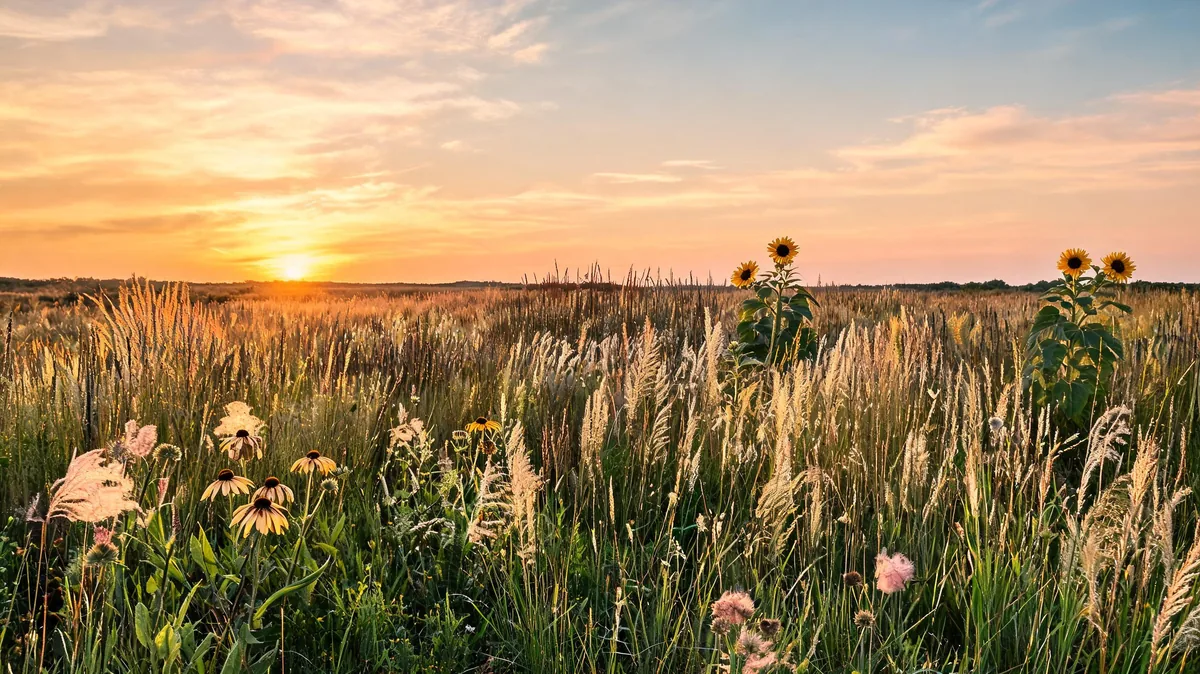
Native Great Plains prairie with bluestem grasses, coneflowers, and wild bergamot under a wide sky
Original brand image — Outdoor Plant Care

True natives vs. cultivars on the Great Plains

Per Kansas State University Research and Extension, "using locally sourced seed of straight-species native plants produces the most resilient plantings." Great Plains ecotypes have adapted to extreme temperature swings (-30°F winters to 110°F summers in some areas), periodic drought, and the desiccating winds that characterize the region. Plants grown from eastern ecotypes may not share these adaptations.

What NOT to call native on the Great Plains: crested wheatgrass (Agropyron cristatum), a Eurasian grass extensively planted for pasture restoration that forms dense monocultures excluding native species; sweet clover (Melilotus spp.), widely planted for wildlife cover but native to Europe and invasive in native habitats; and crown vetch (Coronilla varia), another European pasture plant frequently used on roadsides that invades native grasslands.

The deep root story

Great Plains native plants are famous for their underground investment. Per University of Nebraska Extension, big bluestem roots can reach 10–12 feet deep, and compass plant roots have been measured at 15 feet. This depth is not incidental — it's the adaptation that enabled these plants to survive centuries of drought and fire. It also means that Great Plains natives are slow to establish (all that root growth happens before much is visible above ground), and essentially impossible to eradicate once established. Plant them in the right place and leave them there.

Top 14 native plants for Great Plains gardens

1. Little bluestem (Schizachyrium scoparium)

Zones 3–9. The most widely adaptable native grass of the Great Plains — more drought-tolerant than big bluestem and better suited to shorter, drier conditions. Blue-green in summer, turning brilliant copper-red in fall and holding color through winter. Per Kansas State University Extension, it is "the most important native grass for small Great Plains garden spaces" due to its moderate size (18–30 inches) and spectacular fall color.

2. Purple coneflower (Echinacea angustifolia)

Zones 3–8. The narrow-leaved coneflower native to the Great Plains — distinct from the broader-leaved E. purpurea more common in eastern gardens, and better adapted to dry, alkaline soils. Per University of Nebraska Extension, E. angustifolia "tolerates drought and alkaline soils far better than E. purpurea" and is the appropriate species for authentic Great Plains plantings.

3. Prairie blazing star (Liatris pycnostachya)

Zones 3–9. Dense 4-foot spikes of lavender-purple flowers in July–August. Native to the tallgrass prairie of the eastern Great Plains. Critical monarch butterfly nectar plant during southward migration. Per Kansas State University Extension, it is "the most important native perennial for supporting monarch butterflies in Kansas."

4. Maximilian sunflower (Helianthus maximiliani)

Zones 4–9. Tall perennial (5–8 feet) with masses of yellow sunflowers in September–October — the latest-blooming and most drought-tolerant native sunflower. Spreads by rhizomes over time to form large colonies; better in naturalized areas than formal borders. Per University of Nebraska Extension, it "supports over 20 bee species and is one of the most important fall wildlife plants on the plains."

5. Wild bergamot (Monarda fistulosa)

Zones 3–9. Lavender flowers, July–August. The most drought-tolerant Monarda — appropriate for dry prairie conditions where bee balm (M. didyma) would fail. Per Kansas State University Extension, wild bergamot is "one of the most valuable native plants for supporting Great Plains bumble bee populations."

6. Buffalo grass (Bouteloua dactyloides)

Zones 3–9. The true shortgrass prairie species — low-growing (4–6 inches), warm-season grass that can be used as a no-mow native lawn substitute. Turns tan-brown in winter; greens up in late spring. Requires no irrigation once established in its native range. Per Kansas State University Extension, buffalo grass is "the original sustainable Great Plains lawn grass" but "performs poorly in shaded or wet areas."

7. Smooth blue aster (Symphyotrichum laeve)

Zones 3–8. Blue-lavender flowers in September–October. More drought-tolerant than New England aster and better adapted to Great Plains conditions. Per University of Nebraska Extension, smooth blue aster "provides critical late-season nectar on the Great Plains, particularly for migrating monarchs and late-season native bees."

8. Leadplant (Amorpha canescens)

Zones 2–8. Shrubby native perennial to 3 feet with silver-gray compound leaves and dense spikes of purple flowers with orange stamens in June–July. One of the deepest-rooted native plants on the prairie — roots documented to 16 feet. Almost indestructible once established. Per Kansas State University Extension, leadplant "is a key indicator species of high-quality native prairie remnants."

9. Pale purple coneflower (Echinacea pallida)

Zones 3–8. Pale lavender-pink drooping ray flowers on tall (3–4 foot) stems, May–June. Earlier and taller than E. purpurea. Native to the central Great Plains. Per University of Nebraska Extension, it "performs exceptionally in dry, alkaline prairie soils where few other perennials thrive."

10. Sideoats grama (Bouteloua curtipendula)

Zones 3–9. Medium-height (18–24 inches) bunchgrass with distinctive oat-like seeds hanging on one side of each stem — ornamentally distinctive. The state grass of Texas and native across the Great Plains. Warm-season, drought-tolerant. Per Kansas State University Extension, "one of the most ecologically and aesthetically valuable native grasses for the central and southern Great Plains."

11. Prairie coreopsis (Coreopsis palmata)

Zones 3–7. Yellow flowers in June–July. Spreads slowly by rhizomes to form natural colonies on dry, sandy prairies. Very drought-tolerant once established. Supports specialist Coreopsis bees (Calliopsis spp.) that rely on pollen from this genus.

12. Blue wild indigo (Baptisia australis)

Zones 3–9. Deep blue pea flowers in May–June. Deep taproot; essentially permanent once established. Tolerates dry, alkaline soils and clay. Seed pods rattle attractively in fall. Per Kansas State University Extension, it is "one of the most durable and beautiful native perennials available for Great Plains gardens."

13. American plum (Prunus americana)

Zones 3–8. Native shrubby plum to 15 feet. White flowers in early spring; small red-yellow plums in summer eaten by wildlife. Spreads by suckers to form thickets. Tolerates clay, drought, and cold extremes. Supports 400+ caterpillar species (in the Prunus keystone genus).

14. Golden currant (Ribes aureum)

Zones 3–8. Fragrant yellow flowers in early spring, followed by red, orange, or black berries. Very drought-tolerant once established. Per University of Nebraska Extension, golden currant is "one of the most adaptable native shrubs for the Great Plains, performing in everything from sandy loam to clay."

Site preparation

The greatest challenge to establishing Great Plains natives is competition from existing vegetation — whether cool-season turfgrass, invasive smooth brome (Bromus inermis), or other vigorous colonizers. Per University of Nebraska Extension, "removing existing vegetation before planting is the single most important success factor in native plant establishment." Methods include solarization (mid-summer, 6–8 weeks of clear plastic sheating), fall herbicide followed by spring planting, or sheet mulching.

Common mistakes

Judging establishment by above-ground performance in year one. Great Plains natives routinely look underwhelming in their first season — this is normal. By year three, plants with well-established root systems will produce dramatically more growth and bloom. The standard advice is "sleep, creep, leap."

Sources