Species guide

Marigold Care: French, African, and Signet Types

French, African, and signet marigolds — Tagetes patula, T. erecta, and T. tenuifolia — are among the lowest-maintenance annuals you can grow, with genuine pest-deterrent value in the vegetable garden.
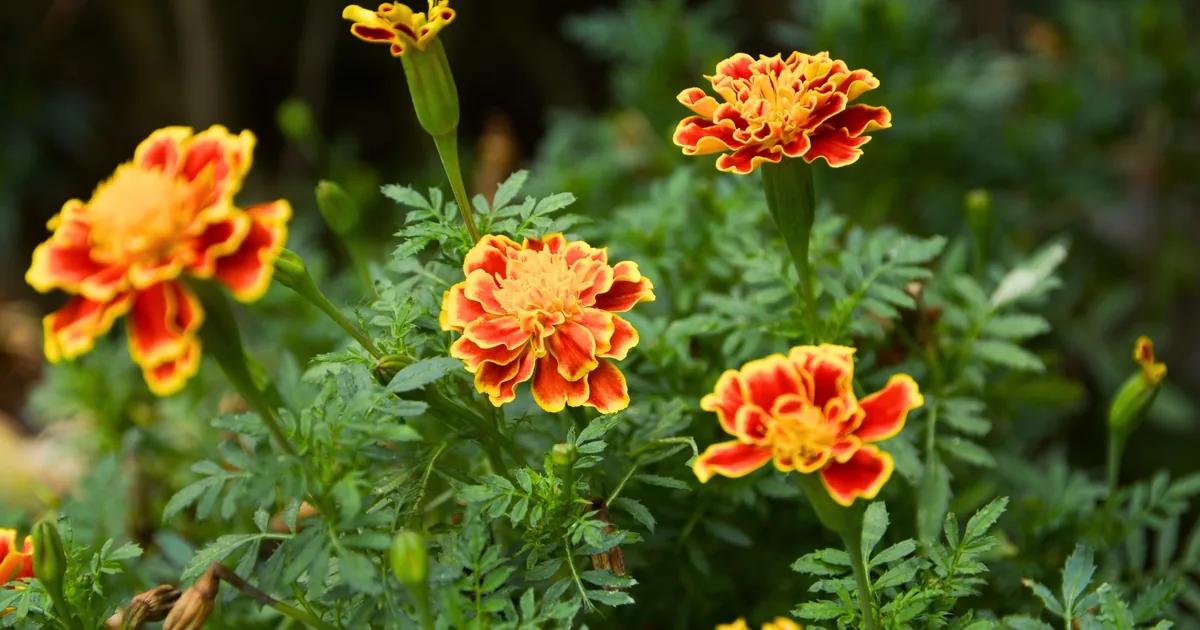
Bright orange and yellow marigold flowers blooming densely in a summer garden bed
Photo: Unsplash

Which marigold are you growing?

French marigolds (Tagetes patula)

Compact plants, 6–12 inches tall, with small single or double flowers in yellow, orange, rust, and bicolor. The most widely sold type. Per University of Minnesota Extension, French marigolds are "more tolerant of wet conditions than African marigolds" and perform well throughout the summer in northern states where African types sometimes struggle with early-season cool temperatures. They deadhead more readily and are generally better for small spaces and borders.

African (American) marigolds (Tagetes erecta)

Despite the name, T. erecta originates in Mexico. Large, fully double pompom flowers 2–4 inches across on plants 18–36 inches tall. The showiest of the three types and the most important for nematode suppression when grown as a cover crop. Per University of Minnesota Extension, African marigolds "take longer to bloom from seed" and are often started indoors 6–8 weeks before transplanting. They need full sun and do not tolerate the cool, wet springs common in zones 4–5 as well as French types do.

Signet marigolds (Tagetes tenuifolia)

Lacy, ferny foliage with small single flowers — less showy than the others but the most aromatic (lemon-scented) and the best for edging. The flowers are edible and genuinely pleasant in salads. 'Lemon Gem' and 'Tangerine Gem' are the standard varieties. Signets are heat-tolerant and self-cleaning — no deadheading needed.

USDA hardiness and where marigolds grow

All three Tagetes species are warm-season annuals, frost-sensitive, and grown in all zones 2–11 as seasonal bedding plants. They are at their best in zones 5–9 where summers provide consistent warmth. Per Clemson Extension HGIC, marigolds "thrive in hot, dry conditions" — they are among the best choices for heat-stressed summer gardens where other annuals flag.

In zones 9–10, they may go into heat-induced semi-dormancy at the peak of summer and rebound in fall for a second bloom period. In zones 3–4, choosing French types (which bloom earlier and tolerate more cool weather at planting) over African types is advisable.

Light

Full sun is required for maximum bloom — at least 6 hours of direct sun, with 8 preferred. Marigolds in part shade grow leggy and produce fewer, smaller flowers. They are among the best annuals for hot, exposed sites that bake in summer. Unlike many annuals, African marigolds in particular rarely need protection from afternoon sun even in hot climates.

Watering

Marigolds are notably drought-tolerant once established, but they perform best with consistent moisture during establishment and bloom production. Per Clemson Extension HGIC, marigolds need "about 1 inch of water per week" but can withstand dry spells without significant damage once their roots are established.

The most important watering rule: avoid overhead watering in the evening. Wet foliage, particularly on spent blooms, promotes botrytis blight — the primary disease problem of marigolds in humid climates. Water at the base or in the morning. In particularly humid gardens, good air circulation through proper spacing matters as much as watering technique.

Soil and pH

Marigolds are tolerant of a wide range of soils, including poor, infertile ones where other plants struggle. A pH of 6.0–7.0 is ideal but not critical. Per University of Minnesota Extension, they "grow in many soil types" but "drainage is critical — marigolds do not tolerate wet feet." Heavy, waterlogged clay soils produce the worst results. In such soils, raised beds or containers are more productive.

Excessively fertile soils produce lush foliage at the expense of flowers — the same phenomenon seen in petunias and geraniums. Marigolds in heavily composted or fertilized beds often bloom less than those in average, moderately lean soil.

Planting

Transplant after last frost date when nighttime temperatures are reliably above 45°F. French marigolds can be sown directly outdoors after frost; African marigolds benefit from indoor starting 6–8 weeks before transplanting because of their longer time to first bloom. Per Clemson Extension HGIC, seeds germinate in 4–7 days at 70–75°F.

Spacing: French marigolds, 6–9 inches apart. African marigolds, 12–18 inches apart. Signet types, 6–8 inches apart. Proper spacing is the most overlooked factor in marigold performance — crowded plants have poor air circulation, harbor botrytis, and produce smaller flowers on weaker stems.

Pinch back transplants at planting time by one-third to encourage branching. Per University of Minnesota Extension, pinching "produces a bushier plant with more flowering stems."

Fertilizing

Marigolds are light feeders. In average garden soil with some compost, supplemental fertilizer is rarely needed. In very poor sandy soils or containers, a monthly application of balanced water-soluble fertilizer (10-10-10 at half strength) is sufficient. Per Clemson Extension HGIC, "too much nitrogen will produce large plants with little bloom." Most growers find marigolds perform better on benign neglect than with heavy fertilizer programs.

Deadheading

Marigolds are annuals, and formal "pruning" in the perennial sense doesn't apply — they don't need any cutting back for health. Deadheading (removing spent blooms before seed sets) extends continuous flower production, because seed set signals the plant to reduce flowering. Remove the spent flower and the short stem below it, down to the next set of leaves. Per University of Minnesota Extension, "regular deadheading prolongs blooming."

If deadheading feels labor-intensive, choose self-cleaning varieties (many modern French and signet types) that drop petals cleanly without needing manual removal. Signet marigolds generally require no deadheading at all.

In late August, spent blooms can be left to dry on the plant for seed saving — marigold seeds are large, easy to collect, and viable. Open-pollinated varieties breed true; hybrid varieties will not.

Marigolds and nematode suppression

French and African marigolds are among the few garden plants with documented suppressive effects on root-knot nematodes (Meloidogyne spp.), which damage tomatoes, peppers, and other solanums. Per UF IFAS Extension, "a solid planting of French marigolds grown as a cover crop for a full season" — planted densely and incorporated into the soil at the end of the season — can significantly reduce nematode populations in infested soils. Interplanting a few marigolds between vegetables provides minimal benefit; the nematode suppression requires a dense, full-season cover-crop planting.

Common problems

Botrytis blight (gray mold)

The primary disease problem of marigolds, particularly African types with large, dense flower heads that trap moisture. Gray fuzzy growth appears on spent blooms and spreads to stems in wet, humid weather. Per UC IPM, management relies on removing spent blooms immediately, improving air circulation, and avoiding overhead evening watering. Fungicide applications of chlorothalonil or copper-based products provide some control.

Powdery mildew

White powdery coating on leaves, most common in late summer. Less damaging than botrytis but unsightly. Improve air circulation, apply potassium bicarbonate or sulfur-based fungicide at first sign.

Spider mites

Fine webbing on undersides of leaves, stippled (silvery-dotted) upper leaf surface, particularly during hot, dry weather. Per UC IPM, a strong water spray dislodges mite populations; insecticidal soap or neem oil provides further control. Broad-spectrum insecticides worsen spider mite problems by killing the predatory mites and insects that keep them in check.

Aster yellows

A phytoplasma disease transmitted by leafhoppers, causing stunted, distorted growth with pale or greenish flowers. Per University of Minnesota Extension, there is no treatment — remove and discard infected plants. The disease is spread by leafhopper feeding; management focuses on controlling leafhopper populations.

Frequently asked

Do marigolds really repel pests?

Partly yes, partly garden mythology. The strong scent of marigold foliage does deter some above-ground insects when in close proximity. The root exudates of T. patula and T. erecta do suppress root-knot nematodes when grown as a dense cover crop for a full season, per UF IFAS Extension. However, the claim that "planting marigolds near tomatoes repels whiteflies or aphids" is not well-supported — the effect on above-ground insects is modest at best when plants are interplanted rather than grown as a solid mass. Use them for what they demonstrably do: nematode suppression as a cover crop, and pollinator attraction for their flowers.

How do I collect marigold seeds?

Allow several flowers on the plant to fully mature and dry — the petals should be brown and papery, not just wilted. Pull the dried flower head off, hold it over a paper bag, and peel the petals back. The seeds are the long, thin, black-and-white striped structures at the base of each petal. Allow them to dry for another week indoors before storing in a cool, dry location. Seeds from open-pollinated varieties (most heirlooms) breed true; hybrid seeds will not.

Why are my marigold leaves turning yellow?

The most common causes: overwatering or poor drainage (check soil moisture and drainage), nitrogen deficiency (uncommon in marigolds but possible in very poor soils), or iron deficiency (chlorosis) in alkaline soils. In late season, some yellowing of lower leaves is normal senescence. Aster yellows disease can cause general yellowing combined with distorted, pale flowers — if you see both symptoms together, remove the plant.

Can I grow marigolds in containers?

Yes — particularly French and signet types, which stay compact. Use well-draining potting mix, water when the top inch is dry, and fertilize monthly at half-strength. African marigolds grow large for most containers but work in 12+ gallon pots.

Sources