Species guide

Juniper Care: Groundcover and Upright Forms

Groundcover and upright Juniperus species are among the most drought-tolerant and site-adaptable landscape plants available, but they fail in shade and wet soil — this guide covers species selection, pruning limits, and Phomopsis blight management.
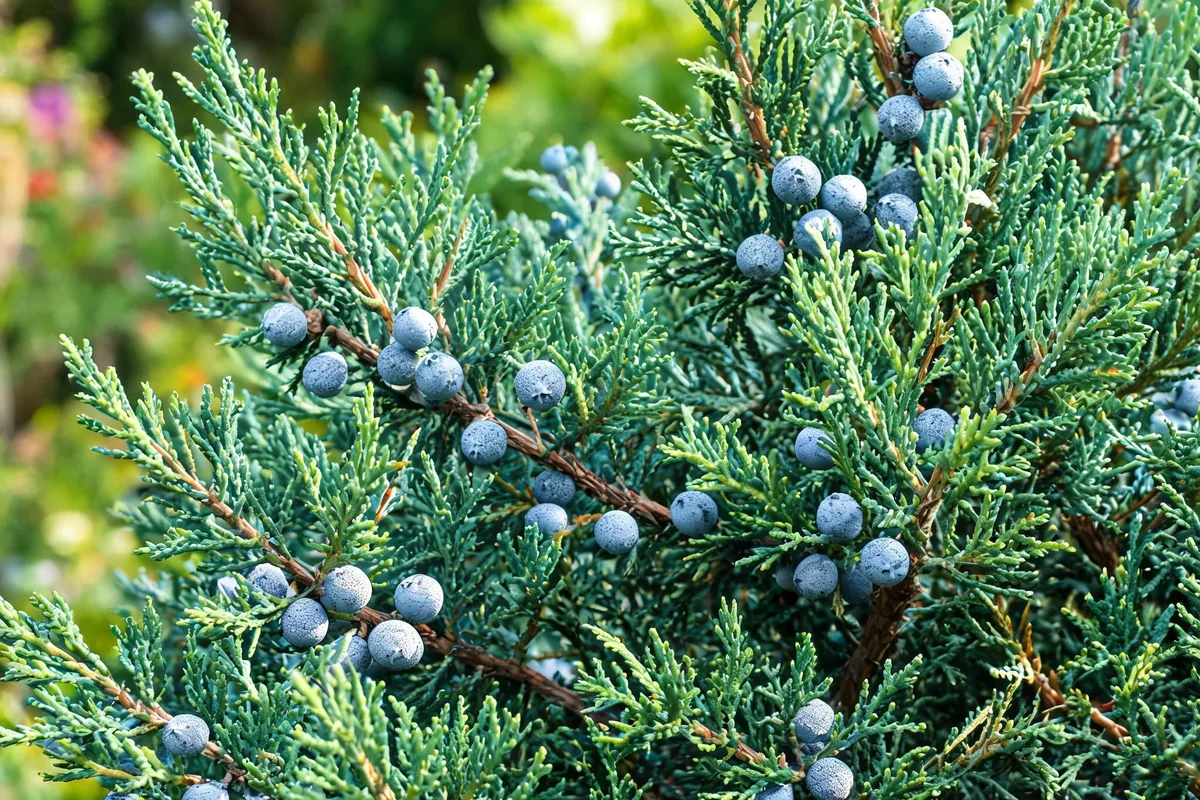
Blue-green juniper groundcover spreading across a sunny slope with silvery berries
Photo: Unsplash

Juniper types and species

The genus Juniperus contains roughly 60–70 species. In North American landscapes, most growers work with one of several categories.

Groundcover junipers

The low-spreading types, typically under 2 feet tall with a spread of 6–10 feet. The most widely planted are Juniperus horizontalis cultivars ('Blue Chip,' 'Bar Harbor,' 'Wiltonii' / blue rug) and J. sabina cultivars ('Tamariscifolia,' 'Calgary Carpet'). Per Penn State Extension, J. horizontalis is "native to northern North America and among the most cold-hardy of all groundcover plants, growing reliably in zone 3." Blue rug juniper reaches only 4–6 inches in height and spreads 6–8 feet.

Mid-size spreading junipers

Heights of 2–5 feet with wide spreading habits. Juniperus chinensis 'Gold Coast,' 'Pfitzeriana,' and 'Sea Green' fall here. 'Pfitzeriana' (Pfitzer juniper) reaches 4–6 feet tall and 8–10 feet wide — per Clemson HGIC, Pfitzer juniper "was once the most widely planted landscape shrub in America but is now out of favor because it outgrows most residential plantings within 10 years."

Upright columnar junipers

'Sky Rocket,' 'Blue Point,' 'Wichita Blue' (J. scopulorum and J. chinensis selections). Narrow, fastigiate forms 10–20 feet tall, often used as screen plants or specimen accents. Per University of Minnesota Extension, upright junipers are "among the most widely used screening plants in the upper Midwest due to their cold hardiness (to zone 3) and narrow footprint."

Eastern redcedar (Juniperus virginiana)

The native juniper of eastern North America. Tree form, 30–65 feet, with dense scale-like foliage and blue-gray "berries" (actually fleshy cones) eaten by wildlife. Per Penn State Extension, eastern redcedar is "one of the most adaptable native trees in North America, growing in everything from poor rocky soil to moderate clay and from zones 2 to 9." Important wildlife plant. Alternate host for cedar-apple rust, which affects nearby apple and crabapple trees.

USDA hardiness and where junipers grow

Per University of Minnesota Extension, most landscape junipers are hardy in USDA zones 3–9, with specific cold hardiness depending on species. J. horizontalis and many J. scopulorum selections reach zone 3. J. chinensis cultivars are typically zones 4–9. Eastern redcedar spans zones 2–9. Junipers are distributed across North America, Europe, and Asia and are exceptionally adaptable to a wide range of climates, from the mountain west to coastal plains.

Light

All junipers require full sun — this is non-negotiable. Per Penn State Extension, "junipers in partial shade develop thin, open, unattractive growth and are highly susceptible to Phomopsis blight." Even 3–4 hours of shade per day measurably reduces density and vigor. Junipers planted under tree canopies or on the shaded side of buildings decline progressively over years. If shade is unavoidable, choose a different genus — no juniper selection performs adequately in less than 6 hours of direct sun.

Watering

Established junipers are among the most drought-tolerant landscape plants in cultivation. Per Clemson HGIC, "mature junipers rarely need irrigation and are well-suited to xeriscaping and low-water landscapes." During the establishment period (first 1–2 years), water weekly. After establishment, supplemental watering is only needed during extreme droughts lasting 3 or more weeks in areas without significant summer rainfall.

Overwatering is far more harmful to junipers than underwatering. Root rot caused by wet, poorly drained soil is the most common cause of juniper failure in residential landscapes. Per Penn State Extension, "the number one killer of junipers in suburban landscapes is planting in poorly drained soil combined with overwatering."

Soil and pH

Junipers thrive in well-drained, average-to-lean soil across a wide pH range. Per Clemson HGIC, junipers "tolerate sandy, gravelly, and even clay soils provided drainage is adequate" and are "adaptable to pH 5.0–8.0 — one of the widest pH tolerances of any landscape plant." This soil adaptability is a key reason for their historical popularity in difficult landscape sites. They do not need amendment at planting if drainage is acceptable. In compacted clay that holds water, planting in a raised mound is the only reliable way to ensure survival.

Planting

Plant container-grown junipers in spring or fall. Per University of Minnesota Extension, fall planting is preferred in zones 3–5 because roots continue establishing during fall rains and cooler temperatures. Groundcover junipers planted in late summer or early fall establish faster than spring-planted specimens in cold climates.

Space according to mature spread. The most common planting mistake with junipers is spacing too close — a 'Blue Rug' that spreads 6 feet needs 3 feet on each side from paths, walls, and other plants. Crowded junipers lose their form, compete for light, and develop more Phomopsis pressure due to reduced air circulation. Per Clemson HGIC, "correct initial spacing is the most important preventive measure against Phomopsis blight."

Fertilizing

Junipers in average garden soil need no fertilization. Per Penn State Extension, "fertilizing established junipers in average soil promotes excessive soft growth that is more susceptible to disease and less cold-hardy." In genuinely poor, nutrient-depleted soil, a single light application of a slow-release balanced fertilizer in early spring can support establishment. Do not fertilize mature specimens unless a soil test indicates a specific nutrient deficiency.

Pruning

The critical rule for pruning junipers: never cut into wood that has no green foliage. Per Clemson HGIC, "junipers cannot regenerate growth from bare, brown wood — any branch cut back to bare wood will remain dead and will not resprout." This means you cannot hard-prune an overgrown juniper back to a smaller size without killing branches permanently. Prune only into the green, needle-bearing portion of branches.

For shape maintenance, shear or selectively prune in late winter or early spring before new growth expands, or in summer after the main growth flush. Per Penn State Extension, "light annual pruning to maintain shape is far better than infrequent heavy pruning that removes too much green tissue at once."

Common problems

Phomopsis tip blight (Phomopsis juniperovora)

The most common and damaging juniper disease. Kills stem tips in spring, starting on the current season's growth and spreading into older wood. Per Penn State Extension, "Phomopsis is most severe on nursery stock and young transplants" and is worst in wet springs with frequent rain. Management: prune out all blighted tips in dry weather (sterilize tools between cuts), apply a copper-based or mancozeb fungicide beginning at bud swell in spring when conditions are wet. Proper plant spacing to allow airflow is the best long-term preventive.

Kabatina tip blight (Kabatina juniperi)

Similar symptoms to Phomopsis but appears on older wood in late winter or early spring. Per Penn State Extension, "Kabatina and Phomopsis are often confused; Kabatina infects through wounds and dormant-season treatment is generally not effective — pruning out infected branches and ensuring plants are not wounded by tools or deer are the primary management strategies."

Bagworms (Thyridopteryx ephemeraeformis)

Caterpillars that build silk-and-needle bags and can defoliate junipers. Per Penn State Extension, "hand-picking bags before they hatch in June is effective for light infestations; Bt (Bacillus thuringiensis) or spinosad applied when caterpillars are small (June–July) is effective for larger populations."

Spider mites

Two-spotted spider mites thrive on junipers during hot, dry conditions. Per UC IPM's spider mite pest note, infestations appear as stippled, bronze foliage — dislodging mites with a forceful water spray, or applying horticultural oil or insecticidal soap, is effective for most infestations.

Frequently asked

Why is my juniper turning brown in the middle?

Interior browning on established junipers is normal — it is the natural shedding of old interior foliage. Per University of Minnesota Extension, "some interior browning each fall is part of normal juniper growth and is not a sign of disease or stress." If browning extends to the branch tips on the exterior of the plant, that is abnormal and suggests Phomopsis, root rot, or bagworm damage.

Can I prune a juniper to keep it smaller?

Only within the green foliage zone. Per Clemson HGIC, you cannot hard-prune an overgrown juniper to half its size without killing the pruned branches permanently. If size control is needed, remove the plant and replace it with a smaller variety. Junipers should be selected based on their mature size, not planned for regular size reduction.

Are junipers deer-resistant?

Per Rutgers NJAES's deer resistance ratings, most junipers are "seldom severely damaged" — the strong aromatic oils in the foliage make them unpalatable to deer. In areas of moderate deer pressure, junipers are a reliable low-browse choice. Heavy deer pressure can still result in feeding on junipers, particularly in winter when other food is scarce.

Can I plant junipers under trees?

Not reliably. The shade and root competition from tree canopies exceeds what junipers can tolerate. Per Penn State Extension, junipers under tree canopy develop "thin, disease-prone growth" even if they survive. For shade groundcovers, consider vinca, pachysandra, or liriope instead.

Sources