Dogwood Care: Flowering Cornus Florida and Kousa Compared
Flowering dogwood (Cornus florida) and Kousa dogwood (C. kousa) are two different trees with opposite bloom sequences, different disease susceptibility, and different site requirements — this guide compares both and explains anthracnose management for C. florida.
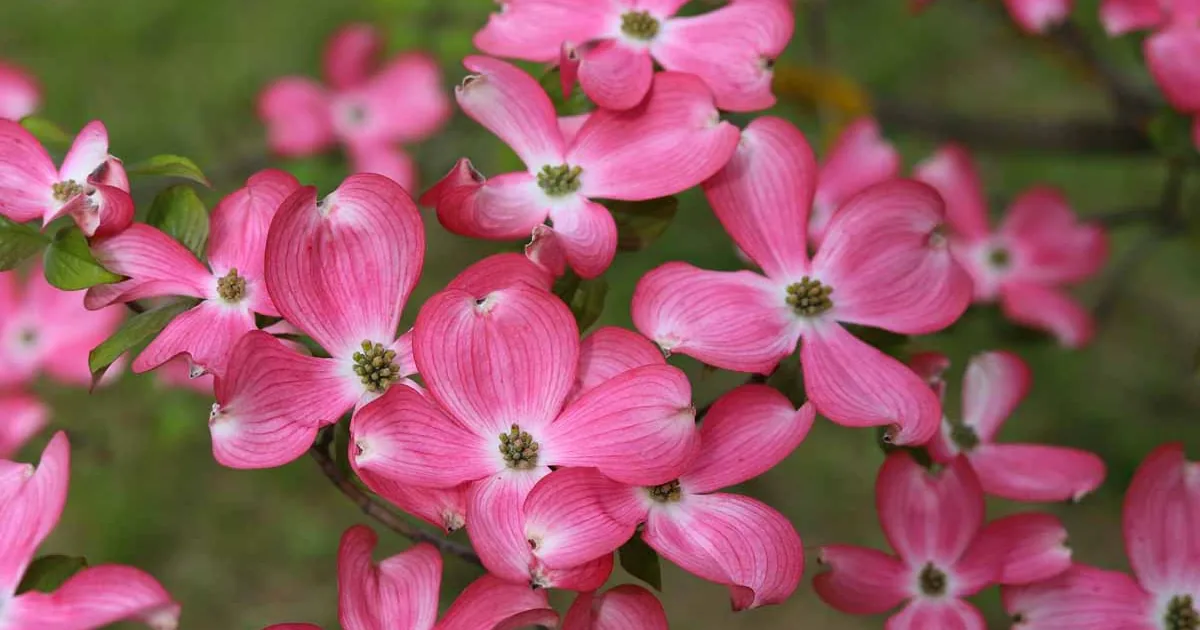
Which dogwood do you have?
Flowering dogwood (Cornus florida)
The native North American dogwood. White or pink four-bract flowers in April–May before or with leaf emergence. Red berries in fall, brilliant red-to-purple fall foliage. Reaches 15–25 feet with a layered horizontal branching pattern. Per Penn State Extension, flowering dogwood "is considered the most beautiful of North American native trees" but "has faced serious decline in many eastern forests and landscapes due to dogwood anthracnose fungus." Hardy in zones 5–9.
Kousa dogwood (Cornus kousa)
Native to Japan and Korea. White or pink four-bract flowers in May–June, about 4–6 weeks after C. florida. Raspberry-like red fruit in fall, excellent fall color, and attractive exfoliating bark on mature trees. Per Penn State Extension, Kousa dogwood is "highly resistant to dogwood anthracnose and powdery mildew that plague C. florida" and has "become the preferred dogwood for landscape use in the mid-Atlantic and Northeast due to its disease resistance." Hardy in zones 5–8. Often a slightly larger tree than C. florida, reaching 20–30 feet.
Rutgers hybrids (Stellar series)
Crosses between C. florida and C. kousa developed by Rutgers University, combining early bloom (closer to C. florida) with disease resistance (closer to C. kousa). 'Stellar Pink,' 'Constellation,' 'Galaxy,' and 'Rutgan' (Aurora) are the main selections. Per Rutgers NJAES documentation on the Stellar series, these hybrids are "resistant to dogwood anthracnose and powdery mildew and perform well in zones 5–8." A practical middle ground for gardeners who want early spring bloom without the disease risk of pure C. florida.