Crepe Myrtle Care: Pruning Without Crepe Murder
Lagerstroemia indica care from planting to winter — which zones support it, why "crepe murder" destroys flower production, and how to prune properly for the long term.
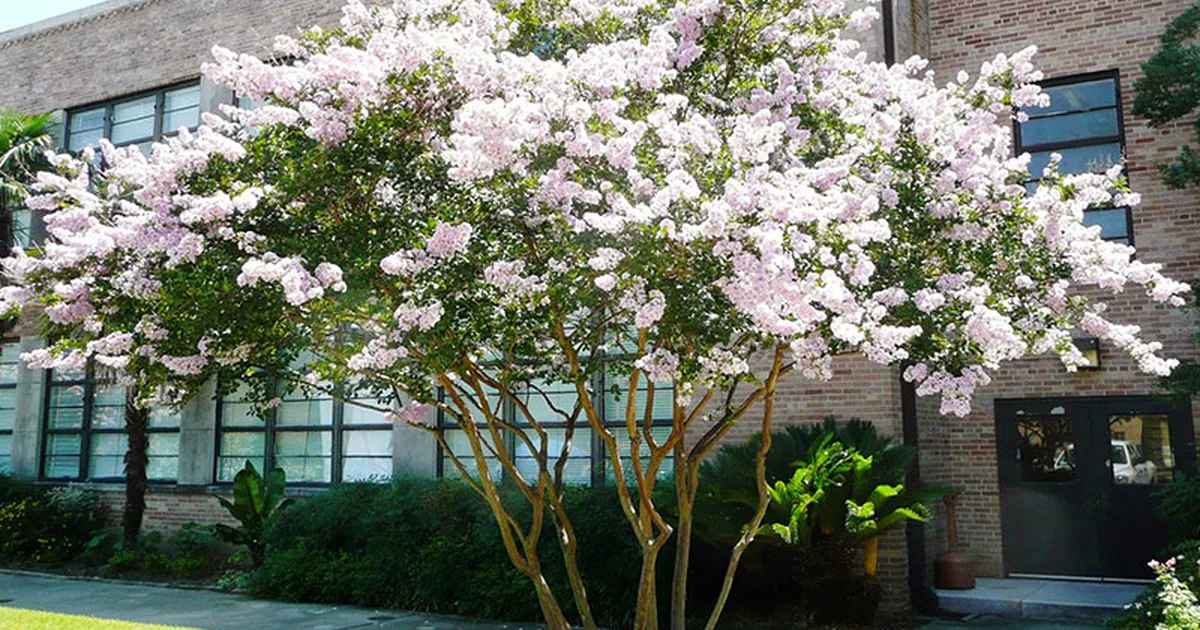
Crepe myrtle species and varieties
Most crepe myrtles in North American landscapes are Lagerstroemia indica or hybrids between L. indica and L. fauriei (Japanese crepe myrtle). The species hybrids, bred by the U.S. National Arboretum, introduced mildew-resistant varieties with colorful bark — per USDA, the National Arboretum's hybrids, named after Native American tribes (Natchez, Tuscarora, Sioux, Comanche), are among the most widely planted crepe myrtles in the country and are noted for exceptional disease resistance.
Size categories
This is the most important selection decision — choosing the wrong size creates the conditions for improper pruning. Per Clemson Extension HGIC:
- Dwarf types (under 5 feet): 'Chickasaw', 'Hopi', 'Pocomoke'. Appropriate for small spaces, foundation plantings, large containers.
- Semi-dwarf to medium (5–15 feet): 'Acoma', 'Sioux', 'Comanche'. Suitable for screens, specimen shrubs, mixed borders.
- Large tree types (15–30+ feet): 'Natchez', 'Tuscarora', 'Muskogee'. These are trees, not shrubs. They should be sited where their natural height is not a problem — not under power lines, not against a building's fascia.
Most of the crepe murder problem stems from planting large tree types in spaces suited to medium or small shrubs, then cutting them back annually to manage the mismatch. Selecting the right size variety at the outset eliminates the "problem" entirely.